
Author: admin

  • investingLive Americas FX news wrap 10 Dec:Fed is well positioned after 25 bp cut.

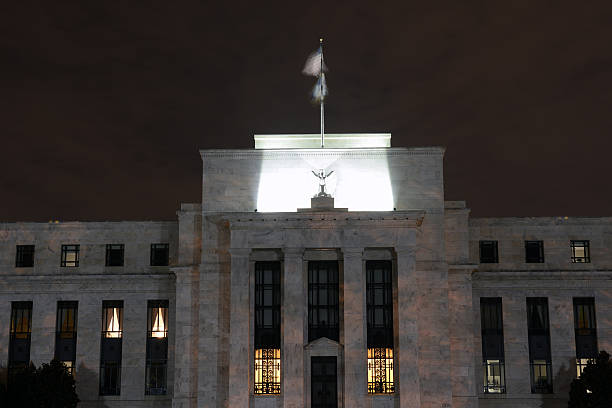
    The Federal Reserve cut rates by 25 basis points as expected to 3.5% to 3.75%. The also announced that they would be purchasing bills in what traders and analysts are calling a mini-QE. The cut was expected to be a hawkish cut. It was more neutral in that the Fed chair emphasized that the Fed is “well-positioned”.

    The vote split came in at 9–3, with Fed Governors Goolsbee and Schmid dissenting in favor of keeping rates unchanged. Meanwhile, Governor Miran dissented in the opposite direction, calling for a 50-basis-point cut.

    The dot plot shows that four additional Fed presidents preferred to hold rates steady, suggesting a larger bloc of hawkish resistance underneath the headline decision. While the full list of dissenters isn’t yet confirmed, it’s highly likely that Dallas Fed President Logan and Cleveland Fed President Hammack were among them—both are well-known inflation hawks and will serve on the FOMC in 2026.

    The identities of the remaining two “hold” voters are still unclear, but based on the composition of the upcoming rotation, it is safe to conclude that Goolsbee and Schmid will be replaced next year by presidents who leaned toward keeping rates unchanged. That shift could be more hawkish (depending on the other two) or unchanged in 2026.

    We should expect to hear more from those hawkish members in the next day or two as they explain their stance and begin shaping the narrative around the Fed’s evolving policy bias.

    Looking at the projections for end of year GDP, Unemployment rate and PCE inflation (headline and core) showed:

    • GDP projected higher to 2.3% from 1.8%
    • Unemployment projected unchanged at 4.4%
    • PCE inflation projected lower at 2.4% from 2.6%
    • PCE Core projected lower at 2.5% vs 2.6%
    • The year end Fed Funds target projected unchanged at 3.4%

    Key Takeaways from the Powell press conference comments.

    During Powell’s press conference, key takeaways were:

    • Powell signaled that policy is now in the plausible range of neutral, with no preset path and decisions remaining data dependent.

    • The labor market is softening gradually, with rising downside risks to employment but no signs of a sharp downturn.

    • Inflation remains somewhat elevated, driven largely by tariffs, while services disinflation continues.

    • Consumer spending is resilient, and AI-related business investment remains strong.

    • Powell emphasized the Fed is well-positioned to wait for more data before deciding on January policy moves.

    In Summary

    Chair Powell framed today’s decision as part of a careful shift toward neutral policy, stressing that the Fed has no preset path and will continue to evaluate incoming data “meeting by meeting.” He noted that the labor market has softened—job gains have slowed, unemployment has edged higher, and labor demand has cooled—but he does not foresee a sharp deterioration, even as downside risks to employment have increased. On inflation, Powell said overall price pressures remain somewhat elevated, with goods inflation now entirely driven by tariffs while services disinflation continues. He also cautioned that recent shutdown-distorted inflation and labor data will require careful interpretation.

    Powell highlighted that consumer spending remains solid and that business investment, especially in AI data-center capacity, continues to expand. Housing remains weak, and a quarter-point rate cut would do little to improve affordability given long-standing supply constraints. Looking ahead, Powell said the Fed is well-positioned to wait for a substantial amount of new data before the January meeting, adding that the Committee broadly supported today’s decision and remains focused on guiding inflation back to 2% while avoiding unnecessary damage to the labor market.

    The markets were encouraged by the Fed chair comments and the decision from the Fed.

    US stocks did move lower on the comment that the rate was now near neutral, but reversed higher as the fear of inflation seemed less a concern (with growth continuing).

    • Dow industrial average rose 497.46 point or 1.05% to 48057.75. The all-time record high close reached on November 12 was at 48254.82.
    • S&P index rose 46.17 points or 0.67% to 6886.68. That is just short of its record high reached on October 29 at 6890.59.
    • NASDAQ index rose and 77.67 points or 0.33% at 23654.16. Its all-time high close reached on October 29 is at 23958.47.
    • Russell 2000 rose 33.36 points or 1.32% at 2559.60. The index closed at a new record high.

    Yields were encouraged by the comments:

    • 2-year yield 3.538%, -7.5 basis points. The 2-year yield is now within the Fed funds target rate between 3.5% and 3.75%.
    • 5 year yield 3.730%, -4.9 basis points
    • 10 year yield 4.150%, -3.5 basis points
    • 30 year yield 4.795%, -1.3 basis points.

    The USD moved lower after the decision. The declines of the greenback vs the major currencies showed:

    • EUR, -0.58%
    • JPY -0.58%
    • GBP -0.65%
    • CHF -0.78%
    • CAD -0.35%
    • AUD -0.57%
    • NZD -0.61%

    This article was written by Greg Michalowski at investinglive.com.

  • The US indices close higher after the Fed rate cut

    Fed Chair Powell emphasized that the Federal Reserve is “well-positioned” on inflation, growth, employment, and overall policy—language that markets interpreted as a signal of confidence in the current stance. While acknowledging that inflation remains elevated, Powell noted that underlying inflation would already be near 2% were it not for tariff effects, which he described as a one-time price adjustment rather than a persistent inflation driver. If tariffs do not increase further, he suggested, inflation should continue drifting back toward target.

    His remarks helped lift equities after an early pullback. By the close, the Dow Jones Industrial Average finished at a new record high, as did the Russell 2000 small-cap index, while the S&P 500 ended just shy of its own record, reflecting renewed risk appetite following Powell’s balanced and reassuring tone

    • Dow industrial average rose 497.46 point or 1.05% to 48057.75. The all-time record high close reached on November 12 was at 48254.82.
    • S&P index rose 46.17 points or 0.67% to 6886.68. That is just short of its record high reached on October 29 at 6890.59.
    • NASDAQ index rose and 77.67 points or 0.33% at 23654.16. Its all-time high close reached on October 29 is at 23958.47.
    • Russell 2000 rose 33.36 points or 1.32% at 2559.60. The index closed at a new record high.

    This article was written by Greg Michalowski at investinglive.com.
  • Powell signals neutral policy stance as non tariff driven inflation fades

    Fed Chair Powell tapped the brakes on expectations for continued easing, noting that the policy rate is now within a plausible range of neutral. Throughout the press conference, he repeatedly emphasized that the Fed is “well-positioned” on policy, inflation, and the labor market—language suggesting confidence in the current stance. While Powell acknowledged that upside risks to inflation remain, he highlighted that service inflation continues to soften and that most of the recent pickup in goods inflation is entirely due to tariffs.

    He added that without these tariff effects, inflation would already be near the Fed’s 2% target, and that tariffs appear to represent a one-time price level adjustment, not an ongoing source of inflation pressure. Together, these comments imply that, absent new tariff increases, inflation should gradually drift back toward target over time.

    The chance for in an April cut moved up from the low 50% to about 60%. The chance for a June cut is around 87%.

    Below is a summary of his comments by topic.

    Monetary Policy Stance & Rate Path

    • Policy rate now in a plausible range of neutral.

    • Committee is well-positioned to determine whether further adjustments are needed.

    • No preset path — decisions made meeting by meeting.

    • “There is no risk-free policy path.”

    • When inflation and employment risks are equally balanced, policy should sit around neutral.

    • Some members feel the Fed should hold, others want to cut once or more.

    • Powell: “I could make the case for either side.”

    • A rate cut is not the base case; opinions are split but balanced.

    • Broad support for today’s decision.

    • Effects of prior cuts are only beginning to show.

    • Haven’t made a decision on January.

    • Front-loading Treasury purchases to get through tax season.

    Labor Market Conditions

    • Layoffs and hiring remain low, but labor demand has softened.

    • September data: unemployment edged up, job gains slowed significantly.

    • Labor market now less dynamic and somewhat softer.

    • Downside risks to employment have risen.

    • Expectation: payrolls running at about –20,000 per month.

    • Labor market cooling more gradually than expected.

    • Labor supply has come down sharply.

    • Risk of job creation turning negative must be monitored closely.

    • Powell does not expect a sharp downturn in employment with rates in current range.

    • “People care a lot about the labor market.”

    • Does not want policy to push down on job creation.

    • AI impact on layoffs still early days, not showing in data yet.

    Inflation Dynamics

    • Inflation remains somewhat elevated.

    • Very few inflation reports since October meeting.

    • Recent readings: goods inflation picked up; services disinflation continued.

    • Underlying inflation still shows mixed signals.

    • Near-term inflation risks tilted to the upside due to goods prices.

    • Evidence growing that services inflation has moderated.

    • Goods inflation now entirely driven by tariffs.

    • Progress seen this year on non-tariff inflation.

    • If tariffs were removed, inflation would be in the low 2s.

    • Expect that tariffs create one-time price increases—but risk exists that this is not true.

    • Powell: “Everyone should understand we will deliver 2% inflation.”

    Economic Activity & Growth

    • Consumer spending remains solid.

    • Business fixed investment continues expanding, supported by AI-related spending.

    • Effects of the government shutdown should be offset by stronger growth next quarter.

    • Baseline expectation: solid growth next year.

    • Strong spending on AI data centers persists.

    • Shutdown-affected data (CPI, household survey) may be distorted, requiring caution.

    • “We’ll get a great deal of data before the January meeting.”

    • Powell stresses Fed is well-positioned to wait for more clarity.

    Housing & Real Estate

    • Housing sector remains weak.

    • A quarter-point rate cut may not materially improve affordability.

    • Long-standing housing supply shortage is the core issue.

    • Fed tools cannot solve structural supply shortages.

    Risks & Uncertainty

    • Downside risks to employment have increased.

    • Upside risks to inflation remain.

    • “Our two goals are a bit in tension.”

    • The Fed must evaluate incoming data very carefully.

    • Household survey and CPI could appear unusually high or distorted due to missing October/November data.

    • Policymaker projections are not a plan, and carry higher uncertainty.

    Balance Sheet & Liquidity

    • Committee judges reserve balances have declined to ample levels.

    • Front-loading purchases to manage tax-season liquidity.

    Internal Committee Dynamics

    • Discussions are thoughtful and respectful despite strong differences of opinion.

    • Members broadly agree inflation is too high and the labor market has softened.

    • Differences lie in weighing inflation risk vs. employment risk.

    • There was fairly broad support for today’s decision.

    Productivity & AI

    • Seeing signs of a positive productivity shock.

    • AI could materially lift productivity in the years ahead.

    • Higher productivity theoretically supports higher GDP growth with stable employment.

    • If productivity averages ~2%, the economy can grow faster without overheating.

    • Higher productivity would imply a higher neutral rate, but “not all things are equal.”

    Tariffs & Supply Dynamics

    • Goods inflation entirely due to tariffs, not demand.

    • If tariffs were removed, inflation would fall into the low 2% range.

    • Tariffs considered a one-time price shock, but data must confirm this.

    Bid

    • Powell wants to hand the next Chair an economy in good shape — strong labor market and inflation under control.

    • When asked about staying on the Board after his term ends, Powell said he has nothing new to share.

    This article was written by Greg Michalowski at investinglive.com.

  • Fed Delivers on Another Quarter-Point Cut, But Signals Higher Bar for Further Policy Easing

    The Federal Reserve Open Market Committee (FOMC) reduced the federal funds rate by 25 basis points (bps), lowering the target range to 3.5%-3.75%. The move comes after consecutive quarter-point cuts at each of the prior two meetings. There were minimal changes to the statement. However, a slight tweak to the reference to further rate cuts […]

    The post Fed Delivers on Another Quarter-Point Cut, But Signals Higher Bar for Further Policy Easing appeared first on ActionForex.

End of content

End of content