Germany HCOB Manufacturing PMI came in at 49.6, above forecasts (49.5) in October
Germany HCOB Manufacturing PMI came in at 49.6, above forecasts (49.5) in October

Follow the latest analyses and key economic, financial, and global market news in this section. Our team reviews the most important market events daily and provides comprehensive insights for traders and enthusiasts.
Cryptocurrencies have further attracted interest as a volatility hedge alternative to traditional forex markets. Analysts and investors alike find it interesting to understand the connection between digital currencies and worldwide movements within currencies.
The global financial system continues evolving and digital currencies take centre stage along with fiat currencies. Forex markets remain exceedingly unstable and are subject to global economics, politics and social relations. Some analysts now view the possibility of cryptocurrencies as a stabilising hedge and provide current cryptocurrency prices and insights into trends worth monitoring alongside forex movements.
Understanding Forex Market Volatility
Forex markets are naturally reactive to shifts in the economy’s direction, geopolitics and global trade flows. Spontaneous moves by the central bank, changes in interest rates, or political instability can cause sudden jumps or drops in pairs such as the euro-dollar or yen-dollar. Volatility can affect global trade, investment decisions and corporate treasuries.
In such a situation, investors look for securities, whose correlation is minimal compared to fiat currencies, for purposes of diversifying the exposure. Cryptocurrencies, as decentralized currencies, represent a new asset class whose behavior is quite different from traditional currencies. Their immaterial nature and global utilization adds both opportunities and risks for the portfolio analysis field.
Traditional vs. Digital Assets
A hedge is typically an investment used to reduce risk from negative market movement. Previously, commodities like gold or government securities were used for this purpose. Digital currencies and cryptocurrencies in particular, provide an alternative means. They are not tied into any single national economy. Therefore, they potentially more resistant to regional economic shocks.Unlike traditional hedges, cryptocurrencies run 24/7 across worldwide networks, ensuring continuous liquidity. Analysts contend that this nonstop trading environment, combined with decentralized protocols, creates distinct challenges when evaluating risk mitigation strategies in forex markets.
Cryptocurrencies as a Hedge
The concept of cryptocurrencies serving as a hedge against forex volatility relies on their independence from central banks. For example, Bitcoin has a fixed supply and operates independently of traditional monetary policies. According to data from crypto exchange Binance, Bitcoin has recently changed hands for around $115,615 and Ethereum for around $4,400, exhibiting the high market value and liquidity of leading digital currencies.
Fiat-pegged stablecoins, on the other hand, offer a contrasting purpose. They do not have vast developmental potential, but can be utilized as a short – term protection for volatility through the retention of value when markets change abruptly. The two – fold agenda allows the coins to perform various tasks within overall investment portfolios, not necessarily working always as classical hedges. Their behavior for the currency volatility allows the experts to realize how the digital currencies are defining the role that the former are taking within the international financial system.
Looking at Correlation Analysis
Research indicates that there is generally a low to moderate correlation between major cryptocurrencies and forex pairs. Since both markets are prone to volatility, the prices of Bitcoin or Ethereum are not always indicative of movement within the classical fiat currencies.
Nils Andersen-Röed, Global FIU Head, underscores the necessity for the monitoring of digital payments: “Despite advanced privacy tools, every crypto transaction leaves a trace – a crucial asset for modern law enforcement. As crypto crime grows more complex, global cooperation and strong public-private partnerships are not optional, but essential.” This trackability means that even though cryptocurrencies are decentralized, their flows can still be analyzed for market information and security issues, an ever-relevant consideration among institutional observers.
Practical Trading Strategies
Understanding how cryptocurrencies interact with forex markets can teach broader analytical perspectives. Most analysts observe trends, correlations and liquidity gauges for market direction without making speculative recommendations.
Data from crypto exchange platform Binance depict Bitcoin’s 24-hour trade volume having varied over the recent past within the $27 billion mark, a sign of global investors’ high interest. Ethereum’s volume also depicts sound liquidity, with the volume for the day hitting $15 billion plus. These figures depict the depth of the market and the capacity of digital currencies to break beyond classical fiat cycles. Following such trends provides an extra layer of analysis within the financial arena.
Investors watching for these trends can explore the behavior of digital currencies during times of devaluation of a currency or matters of geopolitical uncertainty, determining if the cryptocurrencies serve as a store of value alternative, not a hedge directly. Continued development of decentralized finance and institutional interest adds to the worldwide financial focus on the topic.
In The End
Cryptocurrencies are increasingly emerging as a potentially stabilising entity for the forex market volatility, though they don’t replace the traditional hedging tools per se. Their decentralized mechanism, global accessibility and liquidity evoke special parameters that mark them apart from the mainstream currencies. Under constant surveillance and further global cooperation for law enforcement, digital currencies increasingly enter the financial system responsibly.
As cryptocurrency prices and market activity fluctuate, analysts can better understand their relationship with traditional currency markets. This adds an additional variable for assessing the overall stability of the financial system in an increasingly fast-moving world. Continuous monitoring is essential to track the evolving role of digital currencies within global finance.
This article was written by IL Contributors at investinglive.com.
The headline and composite readings are fresh eight-month lows, underscoring the negative sentiment that’s carrying over into Q4 for the French economy. Demand conditions remain subdued and is still the biggest problem but at least employment conditions managed to hold up. Adding to that, price pressures were also on the softer side at the balance and that should provide some comfort for the ECB amid Germany’s situation. HCOB notes that:
“The subdued trend in France’s private sector persists. The Flash Composite PMI for October fell to 46.8, indicating a
continued and stronger contraction in overall economic activity. Output in both manufacturing and services is declining,
pointing to broad-based weakness. Our in-house HCOB nowcasting model predicts zero growth for the third quarter.
“While French firms maintain a fundamentally positive outlook, sentiment deteriorated. This is largely attributable to the weak
global economic environment and domestic political uncertainty. The forward-looking index for business expectations has
worsened further from an already low level, and the order situation remains lacklustre. Although Prime Minister Sébastien
Lecornu gained short-term political leeway for budget negotiations by suspending the pension reform, the overall economic
and political climate remains tense. This is likely to weigh on consumer spending and investment activity.
“Conditions in the manufacturing sector remain fragile. Declines in production and new orders suggest a prolonged period of
weakness. In an effort to boost sales, manufacturers adjusted prices downwards, as output prices fell for the second
consecutive month. However, it is worth noting that the sub-index for employment remains above the growth threshold in
both sectors – a sign of underlying labour market resilience.”
This article was written by Justin Low at investinglive.com.

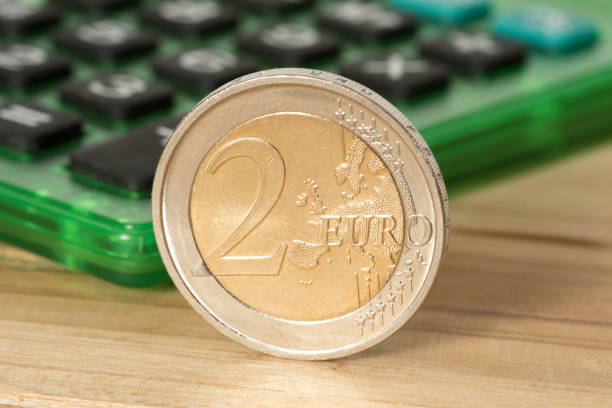
Market sentiment remains dominated by escalating geopolitical tensions in Europe, which are dampening the euro’s outlook and fuelling demand for traditional safe-haven assets, notably the US dollar. The dollar’s strength is further underpinned by the persistently hawkish rhetoric from the Federal Reserve. Officials continue to signal that interest rates will need to remain at their […]
The post EUR/USD Consolidates Ahead of Potential Further Losses appeared first on Action Forex.
This comes after the gains in Wall Street yesterday as well with US futures keeping higher today. S&P 500 futures are seen up 0.3% as we get things going on the session. Market players are still holding on to optimism ahead of US-China talks but in wrapping up the week, the US CPI report is the key risk event to be mindful of.
This article was written by Justin Low at investinglive.com.
End of content
End of content